Renewable energy

Renewable energy is generated by sources that can be renewed, such as the sun and the wind, as opposed to sources that can be used only once, such as fossil fuels.

Cambridge Community Electricity directly supports the development of new renewable energy projects, both locally in Cambridge and also in other states.

The electricity generated by these renewable energy projects takes the place of some fossil-fuel generated electricity and is cleaner than fossil-fuel generated electricity, meaning it does not contribute greenhouse gases like CO2 or air pollution to our atmosphere.

Direct support for new renewable energy in Cambridge

The City is committed to making our local New England electric grid cleaner and supporting local renewable energy jobs.

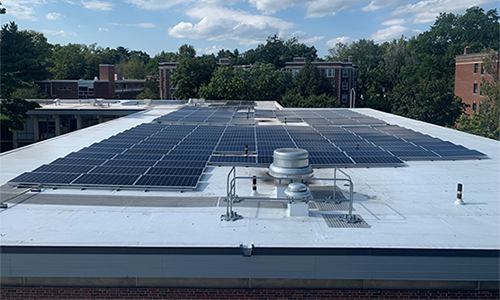
To fund that commitment, all program prices include a small fee of 0.2 ยข/kWh. The City used the money collected from this fee to develop a solar project at Graham and Parks Elementary School. Read the City’s announcement about it.

Graham and Parks Elementary School solar project:

  • A 243 kW solar project.
  • Operational in 2022.
  • 280,000 kWh of electricity generated annually.
  • Projected to reduce CO2 emissions in Cambridge by more than 4 million pounds in its lifetime.
  • The CO2 emissions avoided are equivalent to taking 426 cars off the road or planting more than 32,000 trees.

Direct support for new renewable energy in other states

The City is also working to reduce greenhouse gases outside of New England by funding new renewable energy projects in other states.

Electric grids in other areas of the country can generate more carbon emissions than our grid in New England. Adding renewable energy to those grids can therefore have an even larger impact on fighting climate change than adding renewable energy to our New England grid.

A portion of the prices for Standard Green and 100% Green includes the cost of buying additional RECs over and above the minimum required by state law. Beginning in January 2026, those additional RECs will be purchased from two new projects outside of New England. The City’s commitment to buy the RECs was essential to getting those projects built and operational. Program participants benefit because the cost of these RECs is lower than the cost of buying RECs from New England.

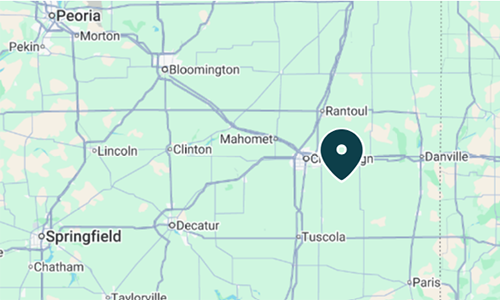
Prairie Solar in Champaign County, Illinois:

  • A 183 MW solar project.
  • Expected to be operational in December 2025.
  • Has the potential to generate enough energy to power up to 37,000 U.S. homes.


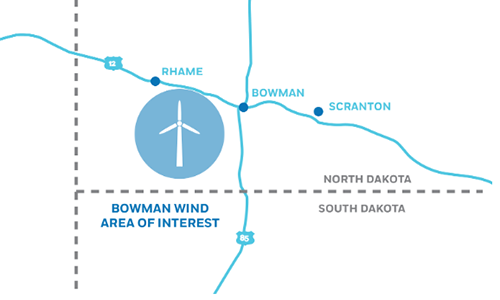
Bowman Wind in Bowman County, North Dakota:

  • A 200 MW wind energy project.
  • Expected to be operational in December 2025.
  • Has the potential to generate enough energy to power up to 72,000 U.S. homes.


What does it mean to buy renewable electricity / what are RECs?

Unless you have a renewable energy system, such as solar panels, plugged directly into your home or office, you cannot purchase the specific electricity that is generated by a renewable energy project. The electricity flowing through the grid is a comingled mix of electricity generated by renewable energy projects as well as electricity generated by burning fossil fuels.

As a result, a separate accounting system has been created to keep track of renewable energy and allow it to be bought and sold. That system uses renewable energy certificates, or RECs. Every time a renewable energy project generates 1 megawatt-hour of electricity, 1 REC is minted. That REC can then be sold. Purchasing a REC gives you, and no one else, the right to say you used the electricity from that renewable energy project.

Anyone who wishes to purchase renewable electricity must then purchase 2 things:

  • the electricity itself from the grid
  • RECs that equal the amount of electricity they wish to claim as renewable

(These two costs are often bundled together, which is why renewable energy costs a bit more.) Whoever buys RECs has the right to say they used the electricity generated by the associated renewable energy projects. Those RECs are then retired so that they cannot be purchased by anyone else, and no one else can claim to have used that electricity.

Anyone buying RECs has the option to buy as many as they wish, including buying RECs that equal more than the electricity used. Because buying RECs provides an important source of revenue for renewable energy developers, voluntarily buying additional RECs can be a strategy for supporting renewable energy.